Skip to main content







By: Senior Crypto Analyst Adam Taylor, CryptoLikeThis | Updated: April 29, 2026 | 8 min read
Most “how to buy crypto” guides read like they were written by someone who has never actually done it. They list five exchanges with identical tick boxes, tell you to “research before investing,” and send you on your way. Not especially useful.
This guide is different. It covers the actual decisions you’ll face — which exchange to use and why, what the fees will really cost you, whether you need a personal wallet, and the mistakes that catch out nearly every first-time buyer. By the end you’ll have everything you need to make your first purchase safely, without overpaying on fees or falling for a scam.
One bit of context first: as of April 2026, over 560 million people globally hold some form of cryptocurrency. The infrastructure has never been better. Buying crypto today takes about 15 minutes from registration to first purchase. The process itself isn’t complicated — but making good decisions within that process requires knowing a few things that most guides skip over.
Step 1: Choose the Right Exchange — and Understand What You’re Choosing Between
An exchange is the platform where you buy, sell, and hold crypto. Think of it like a brokerage account for digital assets. There are dozens of them, but for a first-time buyer in 2026 the decision mostly comes down to four names.
Exchange comparison — April 2026
| Exchange | Spot Trading Fee | Best For | Watch Out For |
|---|---|---|---|
| Binance | 0.10% maker/taker (0.075% if paying in BNB) | Lowest fees, widest coin selection (600+ pairs) | US users redirected to Binance.US which has fewer features; regulatory history |
| Coinbase | Up to 0.60% taker via Advanced Trade; Simple Trade can hit 3–4% on small buys | Easiest to use; best for US beginners; NASDAQ-listed transparency | Most expensive exchange on this list by a significant margin |
| Kraken | 0.25% maker / 0.40% taker at base tier | Best security record (13 years, zero major hacks); best for UK/EU; 500+ coins | Interface less beginner-friendly than Coinbase |
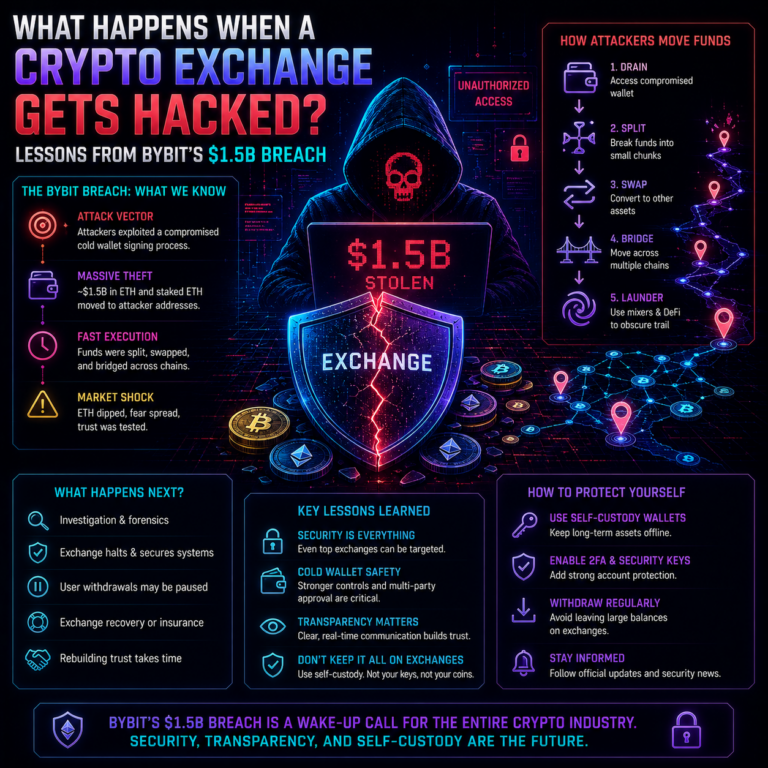
| Bybit | 0.10% maker/taker base | Strong alternative to Binance; good for derivatives later | Suffered a large hack in early 2025; has since improved security protocols |
Sources: Koinly, Kraken, HomeCryptoInvest, DEXTools (April 2026). Fees are standard Tier 1 rates and vary with volume.
The fee difference matters more than people expect. On a £1,000 purchase: Binance charges ~£1. Coinbase’s Simple Trade interface charges £30–40. That’s not a rounding error — that’s a real cost difference on every single trade you make. If you’re going to use Coinbase, always use Coinbase Advanced Trade rather than the default Simple Trade screen. It charges dramatically less.
For UK and European users, Kraken is worth serious consideration. It offers free SEPA and Faster Payments bank transfers, has never been hacked in 13 years of operation, and holds a Wyoming Special Purpose Depository Institution banking charter — a level of regulatory standing that most exchanges don’t have.
For everyone else globally, Binance is the default recommendation on fees and coin selection. Just use the Spot Trading section, not the “Convert” or “Quick Buy” buttons — those charge 1–2% on top of the normal rate.
Step 2: Create Your Account
Registration takes five minutes. Go directly to the official website — bookmark it, don’t search for it each time, because phishing sites mimicking exchange URLs are one of the most common ways beginners get robbed.
- Register with your email address
- Create a strong, unique password — use a password manager if you don’t already
- Enable two-factor authentication (2FA) immediately — use an authenticator app like Google Authenticator or Authy, not SMS if you can avoid it. SIM-swap attacks are common and SMS 2FA is noticeably weaker
Do not skip 2FA. It is the single most effective thing you can do to protect your account. Exchange accounts without 2FA are compromised regularly.
Step 3: Complete Identity Verification (KYC)
Every regulated exchange requires identity verification before you can deposit or buy. This is a legal requirement, not optional. You’ll need:
- A valid photo ID (passport or driving licence)
- A selfie or live photo to match against your ID
- Sometimes proof of address (a utility bill or bank statement)
Verification typically takes between 5 minutes and 24 hours depending on the exchange and how busy their system is. Kraken and Coinbase are generally faster. Binance can take longer during periods of high demand.
One thing worth knowing: the level of verification required increases with how much you want to deposit. Basic verification usually covers small amounts. If you’re planning to deposit larger sums, complete the higher verification tiers upfront rather than hitting a limit mid-process.
Step 4: Deposit Funds — and Don’t Pay More Than You Have To
This is where most beginners accidentally overpay. Payment method has a significant impact on fees.
Payment method comparison
| Method | Typical Fee | Speed | Verdict |
|---|---|---|---|
| Bank transfer (SEPA/Faster Payments) | Free on Binance, Kraken, Coinbase | Minutes to 24 hours | Best option. Always use this if you can wait. |
| Debit card | 1.5–3.99% depending on exchange | Instant | Convenient but expensive. Fine for small first purchases. |
| Credit card | 1.5–4%+ plus potential cash advance fees from your bank | Instant | Avoid. Your bank may charge additional fees on top. |
| Apple Pay / Google Pay | Similar to debit card | Instant | Convenient for small amounts; not ideal for larger purchases. |
| P2P trading | Zero platform fee; negotiate directly | Variable | Good for countries with banking restrictions; requires care choosing counterparties. |
Bank transfer is almost always the right choice. A 3% card fee on a £500 deposit is £15 straight into the exchange’s pocket before you’ve bought a single coin. On a bank transfer, that cost is zero.
Step 5: Buy Your First Crypto
Once your funds are deposited, go to the Spot Trading section of the exchange. Search for the coin you want to buy — most beginners start with Bitcoin (BTC) or Ethereum (ETH), and there’s nothing wrong with that. They’re the most liquid, most researched, and most widely accepted assets in the space.
The most common starting coins — and what they actually are
| Coin | Ticker | Approx. Price (April 2026) | Why beginners choose it |
|---|---|---|---|
| Bitcoin | BTC | ~$94,000 | The original. Longest track record, deepest institutional adoption, most widely understood. |
| Ethereum | ETH | ~$1,800 | Powers DeFi, NFTs, and most of the active blockchain ecosystem. More volatile than BTC. |
| Solana | SOL | ~$140 | Fast, cheap transactions. Now the dominant chain for meme coins and high-speed DeFi. |
| BNB | BNB | ~$600 | Binance’s native token. Useful for fee discounts if you use Binance regularly. |
| USDT / USDC | Stablecoins | ~$1.00 | Pegged to the US dollar. Useful for holding value without full crypto exposure. |
Source: CoinGecko (April 2026). Prices fluctuate — check live data before purchasing.
One important note: you don’t have to buy a whole coin. You can buy £20 worth of Bitcoin. Crypto is divisible — one Bitcoin is made up of 100 million satoshis. Most beginners are surprised to learn you can start with any amount. There’s no minimum beyond what the exchange sets, which is usually £1–10.
When placing your order, use a limit order rather than a market order if the exchange gives you the option. A limit order lets you set the exact price you want to buy at — and crucially, it qualifies for maker fees rather than taker fees, which are cheaper. On Binance that’s 0.10% vs 0.10% (same at base tier), but on Kraken it’s 0.25% vs 0.40% — a 60% difference.
Step 6: Decide Where to Store Your Crypto
This is the step most beginner guides skip or bury at the end. It shouldn’t be buried — it’s probably the most important decision you’ll make after buying.
When you buy crypto on an exchange and leave it there, you don’t technically own it. The exchange holds the private keys. If the exchange is hacked, goes bankrupt, or freezes withdrawals — all of which have happened to major exchanges — your funds are at risk. The phrase in crypto is “not your keys, not your coins.” It’s a cliché because it’s true.
That said, leaving crypto on a reputable exchange for short periods is a reasonable decision for small amounts. The question is: what are you doing with it?
Storage options — what suits who
| Storage Type | Examples | Best For | Main Risk |
|---|---|---|---|
| Exchange wallet | Binance, Coinbase, Kraken built-in | Active traders, small amounts, short-term holding | Exchange hack, bankruptcy, or account freeze |
| Software wallet | MetaMask, Trust Wallet | DeFi users, mid-term holding, anyone wanting self-custody | Losing or exposing your seed phrase |
| Hardware wallet | Ledger, Trezor | Long-term holders, larger amounts, maximum security | Physical loss or damage; user error during setup |
For most beginners holding a few hundred pounds worth of crypto while they find their feet, leaving it on a top-tier exchange like Kraken or Coinbase is fine. Once you’re holding more than you’d be genuinely upset to lose, a hardware wallet becomes worth the £50–80 investment.
If you do move to a self-custody wallet, the transfer process is straightforward:
- Set up your wallet and note your public wallet address
- Go to Withdraw on your exchange
- Paste your wallet address — triple check it before confirming
- Select the correct network (this matters — sending ETH on the wrong network can mean permanent loss)
- Start with a small test transaction before withdrawing the full amount
That last point isn’t paranoia. Even experienced crypto users send a small test transfer first. Blockchain transactions are irreversible. One typo in an address and the funds are gone with no recourse.
The Mistakes That Catch Most First-Time Buyers
These come up constantly. Worth knowing before you buy rather than after.
- Using the Simple Trade / Quick Buy interface. On Coinbase and Binance both, the easy front-page “Buy Bitcoin” button is also the most expensive one. Always use the Spot Trading section.
- Sending crypto on the wrong network. If you’re withdrawing USDT to a MetaMask wallet and you select the ERC-20 network instead of TRC-20, you’ll pay $15 in gas instead of $1 for the same transfer. Worse, if your destination wallet doesn’t support the network you chose, the funds may be permanently inaccessible.
- Sharing a seed phrase. Your seed phrase is a 12 or 24-word backup for your wallet. Anyone who has it has full access to your funds. No legitimate exchange, support team, or crypto project will ever ask for it. If anyone does, they’re trying to steal your crypto.
- Falling for impersonation scams. “Support” accounts on Telegram, X, and Discord that approach you after you post a question are almost always scammers. Real exchange support doesn’t message you first.
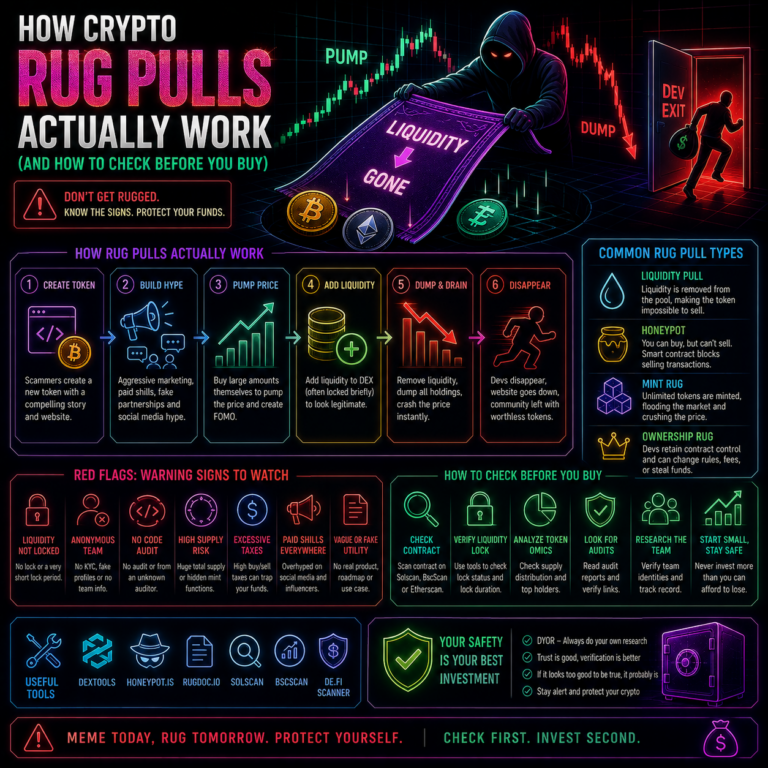
- Buying highly speculative assets too early. Bitcoin and Ethereum are boring by crypto standards. There’s a reason most people recommend starting there. Once you understand the basics, branching into altcoins and meme coins with a small percentage makes sense. Doing it with your whole first investment rarely ends well.
- Not accounting for withdrawal fees. Moving USDT off Binance costs $1 on TRC-20 but up to $15 on ERC-20. Same coin, 15x difference. Always check which network your destination wallet supports and choose the cheapest compatible one.
A Word on UK and EU Regulations in 2026
Regulatory clarity has improved significantly. In the UK, crypto exchanges must be registered with the Financial Conduct Authority (FCA). The EU’s MiCA regulation came into full effect in 2025, requiring exchanges operating in Europe to hold proper licenses and meet transparency standards. Binance, Kraken, and Bitstamp are all MiCA-compliant. This matters because it means recourse options now exist that simply didn’t a few years ago — though crypto investments remain unprotected by the Financial Services Compensation Scheme (FSCS) in the UK.
Capital gains tax still applies to crypto profits in the UK. You’re required to report gains above your annual CGT allowance. Keep records of every purchase and sale — the date, the amount, and the price. Most tax software integrates directly with major exchanges to pull this data automatically.
Frequently Asked Questions
How much do I need to buy crypto?
Most exchanges have a minimum of £1–10. There’s no requirement to buy a whole coin — you can own a fraction of a Bitcoin or Ethereum. A sensible starting point for most people is an amount they’re comfortable potentially losing entirely, which tends to focus the mind on doing proper research first.
Is it safe to buy crypto in 2026?
Safer than it’s ever been, with caveats. Regulated exchanges like Coinbase, Kraken, and Binance have robust security infrastructure and are subject to regulatory oversight. The risks that remain are largely user-side: weak passwords, no 2FA, seed phrase exposure, and sending funds to wrong addresses. Follow the security steps in this guide and the technical risks are minimal. The investment risk — that prices fall — is a separate matter entirely.
Which exchange is best for UK beginners?
Kraken is our recommendation for UK beginners in 2026. Free Faster Payments deposits, competitive fees, 500+ coins, strong regulatory standing, and a 13-year security record. Coinbase is a reasonable alternative if you want the simplest possible interface and don’t mind paying slightly more for it.
What’s the difference between a hot wallet and a cold wallet?
A hot wallet (like MetaMask or Trust Wallet) is software connected to the internet — convenient and accessible but potentially vulnerable to online attacks. A cold wallet (like Ledger or Trezor) is a physical device that stores your private keys offline. For amounts worth protecting seriously, cold storage is the standard recommendation among security-conscious holders.
Do I have to pay tax on crypto in the UK?
Yes. Selling, swapping, or spending crypto that has increased in value triggers capital gains tax in the UK. HMRC has made crypto reporting a growing enforcement priority. Keep records of all transactions and consult a tax professional if your activity is complex. Most major exchanges now provide downloadable transaction histories that integrate with crypto tax software like Koinly or CoinTracker.
The Bottom Line
Buying crypto in 2026 is genuinely straightforward once you’ve made three good decisions: which exchange to use, which payment method to use, and where to store what you buy. Get those right and the rest follows.
Use a regulated exchange. Use bank transfer to deposit. Start with established assets — Bitcoin or Ethereum — before exploring anything more speculative. Enable 2FA without exception. And never, under any circumstances, share your seed phrase with anyone who asks.
The technology is better, the regulation is clearer, and the on-ramps are easier than they’ve ever been. The fundamentals of doing it safely haven’t changed at all.
This article is for informational and educational purposes only. It does not constitute financial advice. Cryptocurrency investments carry significant risk, including the potential loss of capital. Always conduct your own research before making any investment decision.
Data sources: Koinly, Kraken, DEXTools, CryptoPotato, CoinGecko (April 2026)