Articles about hidden crypto opportunities 2026 tend to name the same four sectors and attach no numbers to any of them. That is a shame, because all four are measured continuously on free dashboards, and the measurements change the argument. Together they are worth about 2% of the crypto market. And the strategy usually recommended alongside them, looking for asymmetric upside in smaller projects, has a survival rate that is published and worth knowing before you start.
Key Takeaways
- AI tokens, tokenized real-world assets and DePIN together account for roughly $54 billion, about 2% of a $2.695 trillion market.
- CoinGecko found 53.2% of all cryptocurrencies listed since 2021 are no longer actively traded.
- Roughly 11.56 million tokens failed during 2025 alone, out of nearly 20.2 million listings tracked.
- On one major launchpad, 68.67% of tokens recorded their final trade on the day they were created.
- None of the crypto opportunities 2026 coverage calls hidden is actually hidden. Each has a free public dashboard.
Crypto opportunities 2026: sizing the sectors everyone calls hidden
Start by putting numbers on the four areas the standard version of this article names. All figures are for early September 2026.
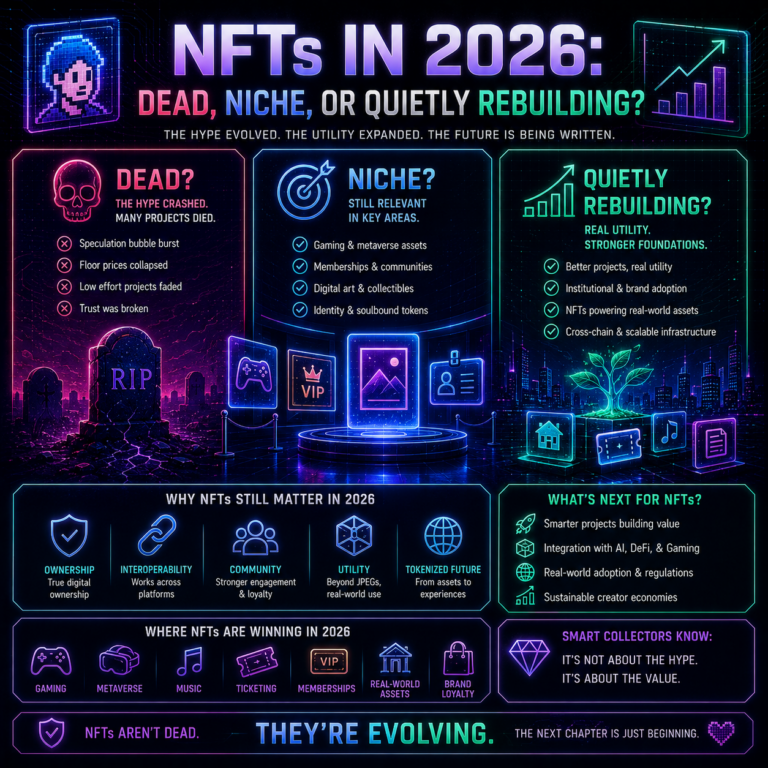
CoinGecko’s AI category held roughly $15.95 billion across 1,448 tokens, about 0.59% of total crypto market capitalisation. DefiLlama’s real-world assets dashboard tracked around $31.7 billion across 217 issuers, roughly 1.18%. DePINscan put decentralised physical infrastructure at about $6.46 billion across 440 projects, close to 0.24%.
Add them together and you get roughly $54 billion, or about 2% of a $2.695 trillion market. These are real sectors with real products. They are also small enough that capital moving into them would barely register in market-wide data, which is worth knowing before treating them as the next major rotation.
The word “hidden” is doing a lot of work
Here is the part that deserves saying plainly. Every sector named above publishes its own live dashboard. So does the wider market. Anyone can check the size of the AI token sector, the tokenized asset market or the DePIN device count in about thirty seconds, at no cost, without an account.
What is true is narrower and more useful. These sectors are measurable while the market has not repriced them, which is a different claim from being undiscovered. Assets outside Bitcoin, Ethereum and stablecoins hold 20.31% of the market, roughly $547 billion, down from a 22.95% share a year ago. The long tail has been losing ground, not quietly accumulating it.
The base rate nobody puts next to the strategy
The old version of this page recommended hunting asymmetric potential in smaller projects. That is a legitimate approach to crypto opportunities 2026 and it has a measurable failure rate.
According to CoinGecko’s research on failed tokens, 53.2% of all cryptocurrencies listed since 2021 are no longer actively traded. Listings grew from 428,383 in 2021 to nearly 20.2 million by 2025, a forty-sevenfold increase, and roughly 11.56 million tokens failed during 2025 alone.
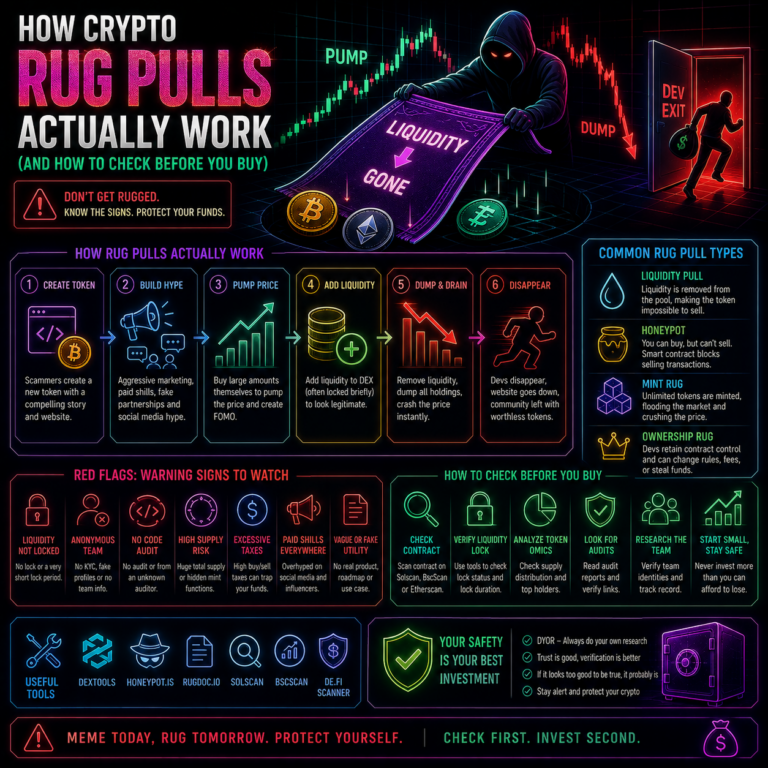
The launchpad data is starker still. Of 18.67 million tokens created on Pump.fun, 68.67% recorded their final trade on the same day they launched, and only 4.55% were still trading after 90 days.
That is the base rate any small-cap strategy operates against. It does not make the approach wrong. It does mean the phrase “asymmetric upside” describes the distribution accurately only if you also state how often the downside is total.
What separates a real sector from a label
Four checks separate genuine crypto opportunities 2026 from labels, and they apply to every sector named earlier.
Does the sector publish a usage metric that is not a token price? Helium reports carrier data volumes. DefiLlama reports assets under management by issuer. Those are outputs. A market capitalisation is not.
Is there revenue, and can you find it? Several categories in this space have market values in the billions against network fee revenue in the low millions, and that gap is checkable per project on CoinGecko’s financial data.
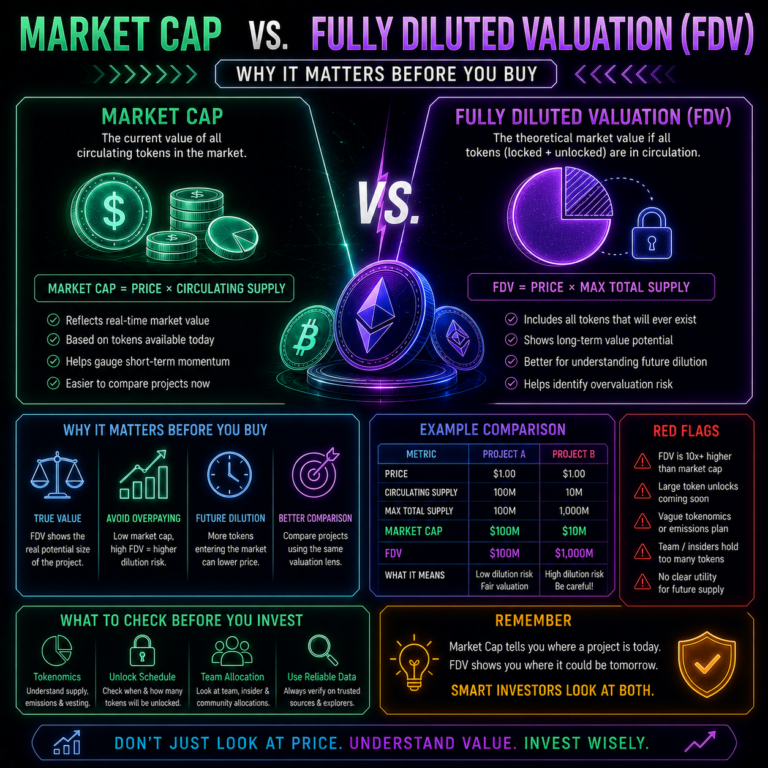
What is the supply schedule? A token with half its maximum supply still to issue needs demand growth simply to hold price.
And has the catalyst already happened? Announced integrations and completed integrations look identical in a headline and mean entirely different things. Our guide to evaluating token sales covers the wider due diligence.
Where the genuine inefficiency actually sits
The old draft argued that crypto remains inefficient compared with traditional markets, and on one specific point it is right, though not for the reason given.
The inefficiency is not that information is scarce. It is that information is abundant and almost nobody reads it. Regulatory filings, protocol documentation, fee dashboards and failure statistics are all public. The advantage available in crypto opportunities 2026 is not access to hidden data, it is willingness to open the data that already exists.
That is a less romantic edge than finding an undiscovered gem, and it is considerably more reliable. Our piece on meme coins versus utility coins covers the same distinction from the other direction.
Final Thoughts
The honest version of crypto opportunities 2026 is that the sectors described as hidden are visible, small and shrinking as a share of the market, while the strategy usually attached to them fails more than half the time by the market’s own published count.
None of that means avoid them. It means size the position for a base rate where 53.2% of listings since 2021 have stopped trading, check the usage metric rather than the narrative, and treat any article that names a sector without naming its market capitalisation as incomplete. The numbers are free. Reading them is the whole edge.
Disclaimer: This article is for informational and educational purposes only and is not financial or investment advice. No sector, project or strategy is endorsed, and no allocation guidance is given. Smaller crypto assets are illiquid and frequently go to zero. Figures come from named sources on the dates stated and change continuously. Do your own research and consider speaking to a qualified professional. See our editorial policy for how we source and verify our reporting.
Data Sources
- CoinGecko Research, Dead Coins: Over 50% of Cryptocurrencies Have Failed, updated 17 April 2026
- CoinGecko, Artificial Intelligence (AI) category, checked September 2026
- DefiLlama, Real World Assets dashboard, checked September 2026
- CoinGecko, Bitcoin Dominance and market share data, checked September 2026