Skip to main content







On November 29, 2024, the decentralized exchange Hyperliquid distributed roughly 310 million HYPE tokens to about 200,000 wallets — a single airdrop initially valued at $1.2 billion. Within a year, that same airdrop was worth approximately $9.5 billion at peak prices, making it the largest community token distribution in crypto history. The average recipient walked away with around $28,500 in HYPE. One single address claimed $9.56 million.
That is the dream most beginners hear about. The reality is messier. Six months before Hyperliquid, LayerZero banned 803,093 wallets from its ZRO airdrop for Sybil farming — users running dozens or hundreds of fake addresses to game the distribution. Most airdrops since 2024 have bled 70-90% within months of launch as recipients dump. And tax authorities in the US, UK, and most of Europe treat airdropped tokens as taxable income at their value on the day you receive them, even if the price crashes before you sell.
So what is a crypto airdrop, how do they actually work in 2026, and how do you participate without losing money on a “free” token? This guide gives you the honest version — useful payoffs, real risks, and the operational rules that separate informed participants from the people who get drained.
What Is a Crypto Airdrop?
A crypto airdrop is when a blockchain project distributes tokens directly to users’ wallets, usually for free, as a way to reward early activity, decentralize ownership, and build a community of holders before listing on exchanges. Airdrops typically reward four kinds of users: people who actively used the protocol before token launch, holders of related tokens or NFTs at a snapshot date, users who completed specific on-chain tasks, and participants in testnet or points programs.
The economic logic is simple. Instead of paying tens of millions in marketing, a project gives away a portion of its token supply to the people who actually used it. Those people become invested in the project’s success, post about it, and provide initial liquidity once the token starts trading. That is the theory. In practice, the airdrop landscape has split into two very different categories: a small number of projects like Hyperliquid that genuinely reward users, and a much larger group that distributes tokens that immediately collapse in price.
The Five Types of Airdrops You Will Encounter
Retroactive airdrops
The most lucrative kind, and the rarest. Projects scan their on-chain history, define eligibility based on past activity, and drop tokens on users who interacted before the airdrop was announced. Uniswap kicked off this model in 2020 with its 400 UNI gift to early users. Arbitrum, Optimism, Celestia (TIA), Jito (JTO), and Jupiter (JUP) followed similar models. Hyperliquid took it furthest — recipients earned points over a six-month campaign before the November 2024 distribution.
Points programs
The dominant model in 2024-2026. Projects launch “points” that track user activity — deposits, trades, referrals, liquidity provision — with the implication (rarely a guarantee) that points will eventually convert to tokens. EigenLayer, Blast, Ethena, and dozens of others have run points programs. The catch: points have no value until the project decides to convert them, and not every program ends in an airdrop. By contrast, some convert generously and others convert in ways that feel like a betrayal to early participants.
Task-based airdrops
The simplest format. Projects ask users to complete a checklist — follow on X, join Discord, retweet a post, hold a specific NFT, complete a quest on Galxe or Layer3 — in exchange for a small allocation. Payouts are usually modest, often $10 to $200, but the time investment is low and the risk is minimal if you stick to verified campaigns.
Holder airdrops
Users receive tokens for holding a specific asset at a snapshot date. Examples include Stellar’s distribution to XLM holders, multiple Cosmos ecosystem drops to ATOM stakers, and various Solana ecosystem airdrops to SOL holders. No tasks required — just be holding the right asset on the right day.
Exclusive or whitelist airdrops
Reserved for select communities — early Discord members, specific NFT holders, OG status badges. These are the smallest in number but often the most generous per recipient because the eligibility pool is narrow.
Why Hyperliquid Changed the Game
Hyperliquid did several things differently that explain why its airdrop succeeded where most fail. First, it allocated 31% of total supply to the community — far above the 5-10% that most projects offer. Second, it took no venture capital money, meaning there was no locked VC supply hanging over the token waiting to dump. Third, it ran a six-month points campaign that rewarded genuine trading activity rather than easy-to-fake task completion. Fourth, HYPE wasn’t immediately listed on major exchanges, so the token could only be traded on Hyperliquid itself — which kept sell pressure organic.
The result is the only airdrop in recent history where the token went up after distribution. By November 2025, Hyperliquid was generating $1-1.3 billion in annualized protocol revenue from just eleven employees, according to DeFiLlama and Token Terminal data — roughly 4-10x the revenue per employee of elite trading firms like Jane Street. The airdrop did not make Hyperliquid succeed. The product did. The airdrop just made the success widely shared.
How Airdrops Actually Work, Step by Step
The process is broadly the same across most airdrops, even if the details vary.
The project announces eligibility criteria. Sometimes this is announced in advance. More often, the project keeps criteria secret to prevent last-minute Sybil farming, then publishes them at the snapshot date.
The project takes a snapshot. A snapshot is a frozen list of qualifying wallet addresses at a specific block. Anything you do after the snapshot does not count.
Sybil filtering runs. Modern projects use firms like Nansen and Chaos Labs to detect wallet clusters and farm operations. LayerZero’s 2024 process banned about 59% of submitted wallets — the largest Sybil filter in airdrop history.
Users claim through the project’s official site. You connect your wallet, sign a transaction, and the tokens land. Some projects require a small gas fee to claim. Others, like LayerZero, controversially required a “donation” to claim — $0.10 per ZRO token donated to the Protocol Guild, which raised about $18.5 million for Ethereum core developers.
The token starts trading. This is where most recipients sell, and where most tokens bleed.
How to Position Yourself for Future Airdrops
If you want to genuinely qualify for airdrops without crossing into Sybil territory or wasting time on dead-end farming, here is what actually works in 2026.
Use protocols you would use anyway. The Hyperliquid airdrop rewarded actual traders. The LayerZero airdrop rewarded users who genuinely bridged assets. Trying to fake activity at the last minute is now nearly impossible thanks to wallet-clustering tools.
Pick one or two protocols, not twenty. Most successful airdrop recipients had deep activity on a small number of projects rather than shallow activity across dozens. Quality of interaction matters more than quantity.
Provide liquidity where it makes sense. LPs often receive bonus allocations. However, LPing comes with impermanent loss risk and smart contract risk, so do not park money in a protocol just for a hypothetical airdrop.
Participate in testnets early. Testnet participation cost almost nothing but has produced some of the largest retroactive airdrops in history, including Celestia and Aptos.
Hold a small allocation of related governance tokens. Many ecosystem airdrops reward holders of ATOM, ETH, SOL, or specific NFTs at snapshot dates.
Follow rumors carefully but never trust them. Telegram and Discord are full of “guaranteed airdrop” guides — most are paid promotion, and many lead to malicious dApps. Cross-check anything you read against the project’s official X account and documentation.
The Risks Most Guides Underplay
The original version of this guide called airdrops “rewards with low risk.” That framing is now actively misleading. Here is what beginners need to know.
Tax liability at receipt, not at sale
In the US, the IRS treats airdropped tokens as ordinary income at fair market value on the day you receive them. The UK’s HMRC takes a similar view. So does most of Europe. This means you can receive tokens worth $50,000 on Monday, watch them collapse 80% by Friday, and still owe income tax on the original $50,000. Several airdrop recipients have been bankrupted by this exact pattern. Check your local tax rules before claiming a large airdrop, and consider selling a portion immediately to cover the tax bill.
The post-airdrop dump is the norm, not the exception
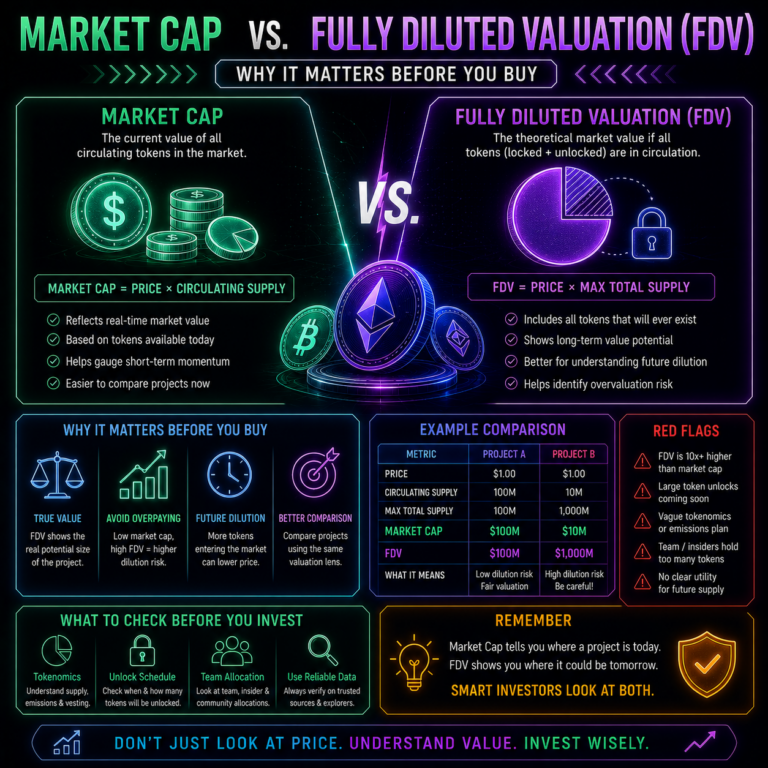
Most airdrops follow a brutal pattern: token launches, claimants sell, price collapses. ZRO opened at around $4.71, hit $4.7B FDV briefly, then trended down. EigenLayer’s EIGEN, Wormhole’s W, and several 2024-2025 airdrops are now down 70-90% from launch. Hyperliquid is the rare exception, not the rule.
Drainer scams target airdrop claimants
The single most dangerous moment in any airdrop is claim day. Fake claim sites that look identical to the official one are launched within minutes of any real airdrop announcement. They use Google Ads to outrank the genuine site, request a “signature” that actually grants drainer permissions, and empty wallets in one transaction. Only ever claim from a URL you have triple-verified against the project’s official X account.
Sybil farming is mostly dead for retail
The economics that made multi-wallet farming profitable in 2021-2023 have largely closed. Modern Sybil detection from Nansen, Chaos Labs, and project-internal teams uses funding patterns, transaction timing, and on-chain behavior to cluster wallets. LayerZero’s ban list and Optimism’s earlier 17,000-wallet disqualification both make the point: industrial farming now gets caught.
“Surprise” airdrop tokens in your wallet are usually phishing
If random tokens appear in your wallet from a project you have never interacted with, do not interact with them. Many “free” tokens are honeypots designed to send you to a malicious site when you try to sell. Hide them in your wallet view and leave them alone.
Real Airdrop Outcomes: The Good, the Bad, and the Ugly
Hyperliquid (HYPE) — November 2024. 310M tokens to 200K wallets. Initial value $1.2B, peaked at roughly $9.5B by November 2025. Average per recipient: $28,500. The benchmark.
Uniswap (UNI) — September 2020. 400 UNI to early users (worth around $1,200 at launch, far more today). Still considered the canonical example of a fair retroactive airdrop.
Arbitrum (ARB) — March 2023. Tiered distribution based on activity score. Many active users received $1,000-3,000 worth of ARB.
Jito (JTO) — December 2023. Rewarded early Solana MEV infrastructure users. Generally well-received distribution.
LayerZero (ZRO) — June 2024. 11.5% of supply to 1.28M wallets, valued at $700M+ at launch. Controversy over Sybil filtering and the “Proof-of-Donation” claim mechanism. ZRO fell roughly 17% on launch day and has bled further since.
EigenLayer (EIGEN) — May 2024. Widely criticized for restrictive geographic eligibility (US and several other regions excluded initially) and stingy allocations. Token launch underwhelming.
The honest pattern: most airdrops are mid-to-bad. The big wins are rare and require months of genuine use of the right protocol, not last-minute task farming.
FAQ
Are crypto airdrops really free?
The tokens themselves cost no money to claim, but you usually pay gas to claim, and in some cases you may need to have used the protocol with real funds for months to qualify. In tax terms, airdrops are not “free” at all — most jurisdictions treat them as taxable income at the time of receipt.
Do I have to pay tax on airdropped tokens?
In most jurisdictions, yes. The IRS in the US, HMRC in the UK, and most European tax authorities treat airdropped tokens as ordinary income valued at their market price on the day you receive them. If you later sell, capital gains tax applies on the difference. Consult a tax professional for your specific situation, especially for larger airdrops.
Is Sybil farming worth attempting?
For most retail users, no. Modern detection from Nansen, Chaos Labs, and project teams has made industrial Sybil farming high-risk and low-reward. LayerZero banned over 800,000 wallets in 2024. Optimism disqualified 17,000+ in 2022. The expected return on most Sybil setups is now negative once you account for the gas spent and the wallets that get caught.
How do I find legitimate upcoming airdrops?
The most reliable sources are project X accounts, official Discord and Telegram channels, and tracker sites like CoinMarketCap, CoinGecko, and Airdrops.io. Be skeptical of any “guaranteed” airdrop guide on YouTube or Telegram — many are paid promotions for low-quality projects, and some link to outright phishing sites.
What is the safest way to claim an airdrop?
Always start from the project’s official X or website link. Triple-check the URL before signing. Use a separate wallet for claims that does not hold your main funds. Read every signature request carefully — legitimate airdrop claims sign a specific function, not a blanket approval. After claiming, revoke any approvals you no longer need using a tool like Revoke.cash.
Should I sell airdropped tokens immediately?
That depends on the project. Most airdropped tokens lose 70-90% of their value within months as recipients dump. By contrast, holding through that wave can pay off significantly for the rare projects with genuine traction (Uniswap, Hyperliquid). A reasonable middle ground is to sell enough to cover your tax liability immediately, then hold the rest if you actually believe in the project.
Final Take
Crypto airdrops are not the free money they were marketed as in 2021. They are a real distribution mechanism with real upside for users who genuinely engage with the right protocols, but they come with tax liability, post-launch dumps, drainer scams, and a Sybil-detection arms race that has closed most of the easy-money plays. Hyperliquid showed what an airdrop can look like when a project actually rewards its users. Most other airdrops in the same period have shown what happens when they do not. The honest takeaway for beginners: use protocols you would use anyway, never share your seed phrase, claim only from verified URLs, set aside the tax money on day one, and assume that any airdrop big enough to make headlines is also big enough to attract scammers within minutes.
Disclaimer
This article is published by CryptoLikeThis for news, education, and information purposes only. It is not financial advice, investment advice, tax advice, or trading advice, and it should not be treated as a recommendation to buy, sell, or hold any cryptocurrency, token, NFT, or digital asset. Cryptocurrency markets are highly volatile and involve risk. Tax treatment of airdrops varies by jurisdiction. Always carry out your own research and seek independent financial and tax advice where appropriate before making any decision involving digital assets.
Sources
- The Block — Hyperliquid Airdrops Over $1.2 Billion in HYPE Tokens (November 2024)
- Blockworks — Hyperliquid’s HYPE Airdrop Breaks the Mold
- Bitget — Hyperliquid Turns One: $1-1.3B in Annualized Revenue (November 2025)
- The Block — LayerZero’s ZRO Token Faces Mixed Reactions as Sybil Crackdown Continues
- Crypto.news — LayerZero Spots 800K Sybil Addresses in Airdrop Scheme
- Cointelegraph — ZRO Token Falls 17% Amid Donation Controversy
- Crypto News Navigator — LayerZero Airdrop Retrospective
- Chainalysis — 2025 Crypto Theft Report (context for drainer scam risk)