Skip to main content







As the crypto market enters 2026, one question dominates investor conversations, social feeds, and analyst reports alike: is the next mega rally finally lining up? After years of volatility, false starts, and narrative shifts, the current environment feels different. Capital flows are changing, on-chain data is strengthening, and long-term conviction appears to be rebuilding quietly beneath the surface.
CryptoLikeThis has analyzed the most influential predictions shaping 2026, combining macro signals, network growth metrics, institutional behavior, and emerging sector narratives. While no forecast is guaranteed, the alignment of multiple indicators suggests that the market may be positioning for something much larger than a short-term bounce.
Why 2026 Feels Structurally Different From Past Cycles
Previous cycles were driven heavily by speculation and retail momentum. While those forces still exist, the structure of today’s market has evolved significantly. Infrastructure is stronger, liquidity is more disciplined, and real-world use cases are no longer theoretical.
Several structural shifts stand out:
• Institutional-grade custody, compliance, and trading tools are now standard
• Layer-2 networks have dramatically reduced transaction costs
• Token economics are more sustainable than in earlier cycles
• Regulatory clarity, while imperfect, is improving in key regions
This maturation changes how rallies form. Instead of explosive, short-lived spikes, analysts are increasingly modeling longer accumulation phases followed by sustained expansion periods.
Macro Forces Shaping the 2026 Outlook
Global macroeconomic conditions continue to play a major role in crypto price behavior. Inflation trends, interest rate policy, and currency stability all influence capital allocation decisions. In 2026, several macro themes are converging in crypto’s favor.
Monetary policy appears to be stabilizing after years of tightening cycles. As risk appetite gradually returns to global markets, digital assets are once again being evaluated as both growth opportunities and long-term hedges. At the same time, geopolitical uncertainty continues to push investors toward decentralized alternatives.
CryptoLikeThis analysts note that crypto is no longer viewed purely as a speculative asset class. For many portfolios, it has become a strategic allocation with defined risk parameters.
Bitcoin’s Role As the Market Anchor
Any discussion of a mega rally must start with Bitcoin. As the market’s primary liquidity engine, Bitcoin sets the tone for capital rotation across the ecosystem. In 2026, Bitcoin’s narrative is shifting from volatility to resilience.
Key factors supporting bullish long-term predictions include:
• Reduced new supply following prior halvings
• Growing sovereign and institutional interest
• Increasing use as a treasury diversification asset
• Strong long-term holder accumulation
Several models suggest that Bitcoin does not need parabolic price action to ignite broader rallies. Even sustained consolidation at higher ranges can provide the stability needed for altcoins to outperform.
Ethereum’s Expanding Economic Gravity
Ethereum remains the backbone of decentralized finance, NFTs, and smart contract innovation. In 2026, its role is expanding beyond speculation into settlement infrastructure for digital economies.
Layer-2 adoption continues to accelerate, bringing millions of users into the ecosystem without overwhelming the base layer. Staking participation has stabilized, reducing circulating supply while aligning incentives across participants.
Predictions for Ethereum in 2026 often focus less on price targets and more on network dominance. As more applications choose Ethereum-compatible environments, value capture becomes more structural and less narrative-driven.
The Altcoin Rotation Theory Returns
One of the most widely discussed 2026 predictions is the return of a sustained altcoin rotation. Historically, these periods occur when Bitcoin stabilizes and capital seeks higher beta opportunities.
Several conditions suggest this rotation could be forming:
• Bitcoin dominance showing signs of plateauing
• Increased venture funding into application-layer protocols
• Rising on-chain activity in mid-cap ecosystems
• Improved liquidity across decentralized exchanges
However, analysts caution that 2026 will likely reward selectivity rather than broad speculation. Utility, token economics, and user growth matter far more than hype alone.
Sector Narratives Gaining Momentum
Rather than a single dominant narrative, 2026 appears to be shaping up as a multi-sector expansion phase. CryptoLikeThis has identified several themes gaining consistent traction.
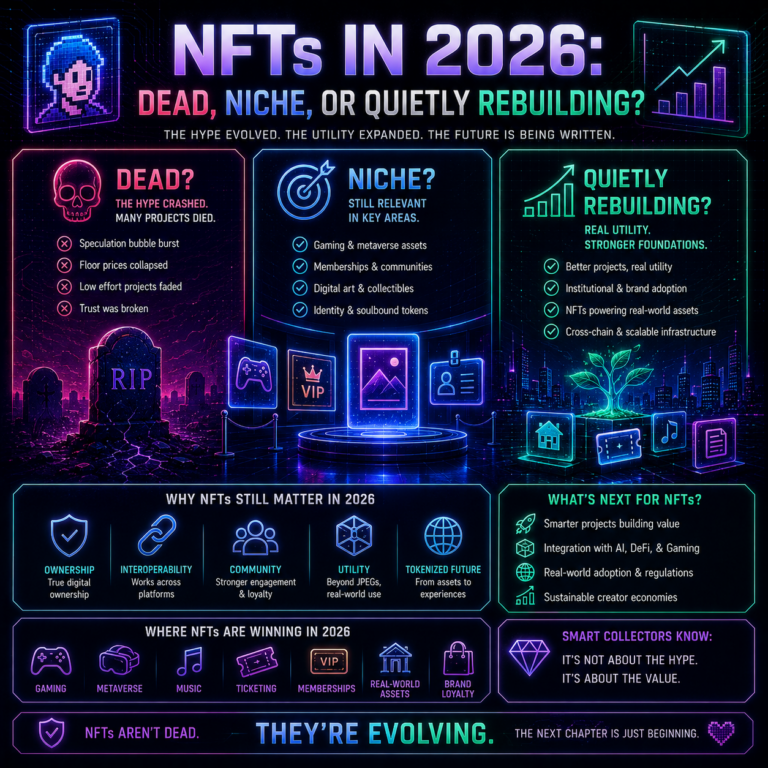
Decentralized finance continues to evolve toward real yield models and sustainable lending mechanisms. Gaming and digital ownership are integrating more deeply with traditional platforms. Artificial intelligence tokens are moving beyond branding into functional integrations.
Meanwhile, real-world asset tokenization is quietly becoming one of the most institutionally supported sectors, bridging traditional finance and blockchain infrastructure.
On-Chain Data Signals Quiet Accumulation
On-chain analytics often reveal trends before price action reflects them. In early 2026, multiple indicators point toward steady accumulation rather than speculative churn.
Notable signals include:
• Declining exchange balances for major assets
• Increasing long-term holder supply
• Rising wallet activity without corresponding price spikes
• Stablecoin inflows preparing for deployment
These patterns historically precede extended uptrends rather than short-lived rallies, suggesting that patient capital is positioning ahead of broader market recognition.
Institutional Behavior Is More Strategic Than Ever
Unlike previous cycles, institutions in 2026 are not chasing momentum. Instead, they are deploying capital gradually, often through structured products and long-duration strategies.
CryptoLikeThis observes that institutional interest is less visible on social media but more evident in infrastructure investment, custody expansion, and derivative market growth. This shift reduces volatility while increasing the probability of sustained upward trends over time.
Retail Sentiment Remains Cautiously Optimistic
Retail participation is present but far from euphoric. Search trends, social engagement, and trading volume suggest curiosity rather than mania. Historically, this stage represents the middle of a cycle rather than the end.
Retail investors appear more educated, focusing on portfolio construction rather than single-token bets. This behavioral shift supports healthier market dynamics and reduces the risk of rapid blow-off tops.
Price Predictions vs Probability Models
Headline price targets dominate crypto media, but CryptoLikeThis emphasizes probability-based scenarios instead. Rather than asking how high prices could go, analysts are modeling how likely sustained growth has become under current conditions.
Across multiple assets, the probability of higher highs over a multi-year horizon has increased materially. This does not eliminate risk, but it shifts the risk-reward balance in favor of long-term positioning rather than short-term trading.
Potential Risks That Could Delay the Rally
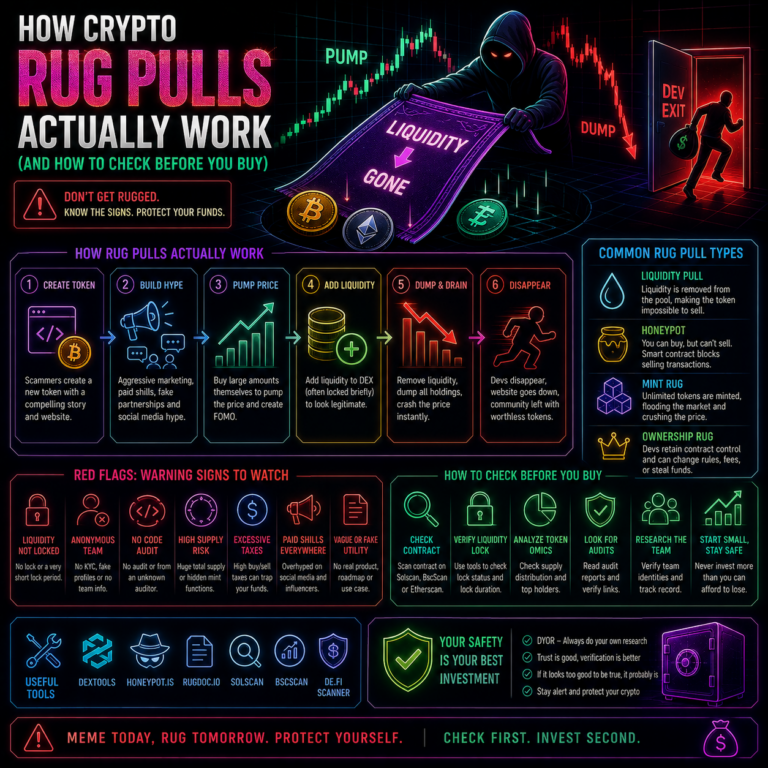
No outlook is complete without acknowledging risks. Regulatory surprises, macro shocks, or technological failures could slow or disrupt momentum. Additionally, excessive leverage remains a vulnerability during periods of optimism.
However, compared to previous cycles, the market’s ability to absorb negative events has improved significantly. Resilience, rather than fragility, increasingly defines crypto’s market behavior.
What a Mega Rally Might Look Like in 2026
If the next mega rally unfolds, it may not resemble past cycles. Instead of vertical price charts, investors may see:
• Extended accumulation phases
• Gradual expansion across multiple sectors
• Periodic corrections without full trend reversals
• Broader participation from non-native crypto users
This type of rally rewards patience, research, and strategic allocation rather than impulse trading.
CryptoLikeThis Final Outlook
The question is no longer whether crypto can recover, but how it evolves during its next expansion phase. The convergence of macro stabilization, infrastructure maturity, institutional discipline, and real-world adoption makes 2026 one of the most structurally promising years the market has seen.
While certainty is impossible, the data increasingly supports the thesis that the next mega rally is not a matter of hype, but of timing. Investors willing to think in probabilities rather than predictions may be best positioned to benefit from what comes next.
CryptoLikeThis will continue monitoring these signals as the year unfolds, focusing not on noise, but on the underlying shifts that shape long-term market direction.
Disclaimer: This article is for informational and educational purposes only and should not be considered financial advice. Cryptocurrency markets are volatile and involve risk. Always conduct your own research before making investment decisions.