Skip to main content
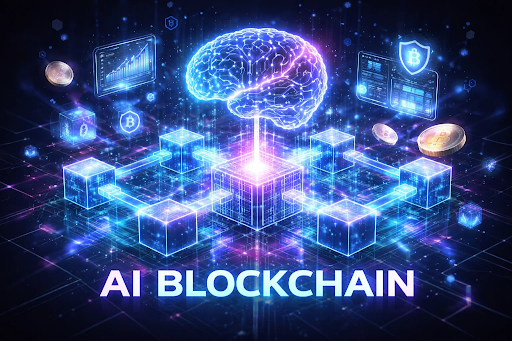
The convergence of artificial intelligence and blockchain technology is quickly becoming one of the most compelling narratives in the digital asset space. While each technology has developed along its own path, their intersection is now creating a new generation of decentralized systems that are more intelligent, efficient, and autonomous. As this trend gains momentum, investors, developers, and institutions are paying close attention to how AI and blockchain can work together to reshape the future of technology.
This merging is not simply a theoretical concept. It is already beginning to influence how decentralized applications are built, how data is processed, and how decisions are made within blockchain ecosystems. By combining AI’s ability to analyze and learn with blockchain’s ability to secure and decentralize, a new class of systems is emerging that could redefine what is possible in both fields.
Why AI and Blockchain Naturally Complement Each Other
At their core, artificial intelligence and blockchain address different but highly compatible challenges. AI focuses on extracting insights from data, automating decision-making, and improving efficiency through learning algorithms. Blockchain, on the other hand, provides a secure and transparent framework for storing data, executing transactions, and removing the need for centralized control.
When these two technologies are combined, they can enhance each other in meaningful ways. Blockchain can provide trusted, tamper-resistant data for AI systems, ensuring that the information used for training and decision-making is reliable. At the same time, AI can optimize how blockchain networks operate, improving scalability, efficiency, and overall performance.
This synergy is what makes the combination so powerful. Instead of operating in isolation, AI and blockchain can create systems that are both intelligent and decentralized. This opens the door to new applications that were not previously possible with either technology alone.
Smarter Decentralized Applications Are Emerging
One of the most visible outcomes of this convergence is the development of smarter decentralized applications. Traditional decentralized apps rely on predefined logic through smart contracts. While this allows for automation, it can be limited in flexibility because the rules are fixed once deployed.
AI introduces a new layer of adaptability. Instead of relying solely on static rules, decentralized applications can begin incorporating dynamic decision-making. This means systems can respond to changing conditions, learn from user behavior, and improve over time.
For example, AI-powered decentralized finance platforms could adjust risk models based on real-time data, improving efficiency and potentially reducing exposure to volatility. Similarly, decentralized marketplaces could use AI to enhance pricing models, match buyers and sellers more effectively, and improve overall user experience.
This shift from static to adaptive systems represents a major evolution in how blockchain applications function. It moves the space closer to intelligent automation rather than simple rule execution.
Autonomous Agents Could Redefine Blockchain Interaction
Another major development is the rise of autonomous agents within blockchain ecosystems. These are AI-driven entities that can perform tasks, make decisions, and interact with smart contracts without direct human input.
Autonomous agents have the potential to transform how users interact with decentralized systems. Instead of manually executing transactions or monitoring markets, users could rely on AI agents to manage these processes on their behalf. This could include portfolio management, trading strategies, or even participation in decentralized governance.
The concept extends beyond finance. Autonomous agents could operate in supply chains, digital identity systems, and data marketplaces, executing tasks more efficiently than traditional systems. Because these agents operate on blockchain networks, their actions can be transparent, verifiable, and secure.
This combination of autonomy and decentralization could lead to a new level of efficiency across multiple industries, reducing the need for constant human oversight while maintaining trust in the system.
Data Becomes More Valuable in a Decentralized AI World
Data is a critical component of artificial intelligence, but access to high-quality data is often limited by centralization. Large organizations typically control valuable datasets, creating barriers for smaller participants. Blockchain has the potential to change this dynamic by enabling decentralized data sharing.
In a blockchain-based system, users can contribute data in a secure and transparent way, often retaining control over how it is used. This can create new incentives for data sharing, as individuals and organizations may be rewarded for providing valuable information.
When combined with AI, this decentralized data model becomes even more powerful. AI systems can train on a broader and more diverse set of data, improving their performance and accuracy. At the same time, blockchain ensures that data integrity is maintained, reducing the risk of manipulation or bias.
This shift could democratize access to data and AI capabilities, allowing more participants to benefit from advanced technologies rather than concentrating power in a few centralized entities.
Enhancing Security and Trust in AI Systems
One of the challenges facing artificial intelligence is trust. AI systems often operate as “black boxes,” making decisions that are difficult to verify or understand. This lack of transparency can create concerns, especially in high-stakes applications.
Blockchain can help address this issue by providing a transparent record of how data is used and how decisions are made. By recording inputs, processes, and outputs on a decentralized ledger, it becomes easier to audit and verify AI behavior.
This increased transparency can enhance trust in AI systems, particularly in areas such as finance, healthcare, and governance. Users can have greater confidence that decisions are based on accurate data and that the system is operating as intended.
In addition, blockchain’s security features can help protect AI systems from tampering. By ensuring that data and algorithms are stored in a decentralized and immutable way, it becomes more difficult for malicious actors to manipulate outcomes.
Tokenization and Incentives Are Driving Innovation
The integration of blockchain introduces new economic models that can accelerate AI development. Tokenization allows for the creation of incentives that encourage participation, contribution, and innovation within decentralized ecosystems.
For example, users can earn tokens for providing data, validating AI outputs, or contributing computational resources. This creates a more collaborative environment where participants are rewarded for their involvement.
These incentive structures can help overcome some of the challenges associated with centralized AI development, such as limited access to resources and uneven distribution of benefits. By aligning incentives across the network, blockchain can support a more inclusive and scalable approach to AI innovation.
Real-World Use Cases Are Expanding
The combination of AI and blockchain is already being explored across a variety of industries. In finance, AI-driven blockchain systems are being used to enhance trading strategies, risk management, and fraud detection. In supply chains, they can improve tracking, forecasting, and efficiency.
Healthcare is another area with significant potential. Blockchain can securely store patient data, while AI can analyze that data to improve diagnostics and treatment plans. This combination can lead to more personalized and effective healthcare solutions.
In the energy sector, decentralized systems powered by AI can optimize resource distribution and consumption. Smart grids, for example, can use AI to balance supply and demand while relying on blockchain for transparent and secure transactions.
These use cases demonstrate that the convergence of AI and blockchain is not limited to theoretical applications. It is already beginning to impact real-world systems in meaningful ways.
Challenges Still Need to Be Addressed
Despite the promise of this convergence, challenges remain. Both AI and blockchain are complex technologies, and integrating them effectively requires significant expertise and resources. Scalability is still an issue, particularly for blockchain networks handling large volumes of data.
There are also concerns around data privacy and ethical considerations. While blockchain can enhance transparency, it must be balanced with the need to protect sensitive information. Similarly, AI systems must be designed to avoid bias and ensure fair outcomes.
Regulation is another factor that could influence the pace of development. As both technologies evolve, governments and regulatory bodies will need to establish frameworks that support innovation while addressing potential risks.
These challenges do not diminish the potential of AI and blockchain, but they highlight the importance of careful development and collaboration across the industry.
Why This Trend Matters for Crypto Investors
For investors, the merging of AI and blockchain represents a significant opportunity. Projects that successfully integrate these technologies could become key players in the next phase of the crypto market. As narratives shift, AI-focused blockchain projects are already attracting increased attention.
This does not mean that every project in this space will succeed. As with any emerging trend, there will be both winners and failures. However, the overall direction suggests that this sector could play an important role in shaping the future of decentralized technology.
Investors are increasingly looking for projects that offer more than just speculative value. The combination of AI and blockchain provides a clear use case that aligns with broader technological trends. This makes it an area worth watching as the market continues to evolve.
The Future of Smarter Decentralized Systems
Looking ahead, the integration of AI and blockchain could lead to a new generation of systems that are not only decentralized but also intelligent and adaptive. These systems have the potential to operate more efficiently, respond to changing conditions, and create new forms of value.
As technology continues to advance, the boundaries between AI and blockchain may become less distinct. Instead of being viewed as separate innovations, they could become part of a unified ecosystem that supports a wide range of applications.
This evolution could redefine how digital systems are built and how they interact with users. It could also expand the role of decentralization, making it more accessible and impactful across different industries.
Final Thoughts
The merging of AI and blockchain is one of the most exciting developments in the crypto space. By combining intelligence with decentralization, these technologies are creating systems that are more capable, secure, and efficient than ever before.
While challenges remain, the potential benefits are significant. From smarter decentralized applications to autonomous agents and improved data sharing, the possibilities are vast. As adoption continues to grow, this convergence could play a major role in shaping the future of both technology and finance.
For now, the trend is still in its early stages, but it is gaining momentum. As more projects explore the intersection of AI and blockchain, the impact is likely to become more visible. For investors and observers alike, this is a space that may define the next wave of innovation in the crypto market.
Disclaimer
Crypto is highly volatile and investing in digital assets carries risk. This article is for informational purposes only and should not be considered financial advice. Investors should always conduct their own research before making any investment decisions.