Skip to main content








Artificial intelligence is reshaping crypto trading and market analysis. That is the claim, made constantly and rarely measured, and it has a checkable form: if AI had restructured this market, it would show up in market data. Testing it against published figures produces a more specific answer than the headline suggests. AI crypto market analysis 2026 is genuinely being reshaped in two places, both of them automated and documented. The largest structural changes of the past two years came from somewhere else entirely.
Key Takeaways
- One ETF issuer supplied 83% of a single day’s Bitcoin ETF inflows in August 2026, and 86.5% of another.
- Bitcoin ETF flows reversed direction within a single month, from $385 million out to $2.80 billion in.
- An October 2025 liquidation cascade wiped roughly $19 billion of leveraged positions in 24 hours.
- The entire AI token sector is about 0.58% of total crypto market capitalisation.
- In AI crypto market analysis 2026 terms, automation is measurably present in liquidation engines and mark pricing, not in price discovery.
AI crypto market analysis 2026: what actually restructured the market
Start with what changed rather than what was announced. Two things reshaped crypto market behaviour recently, and neither is artificial intelligence.
The first is regulated flow. Farside Investors’ Bitcoin ETF data shows eight consecutive positive sessions from 17 to 26 August 2026 totalling roughly $2.80 billion, immediately after a week of $385.2 million in net outflows. Cumulative flows since launch stand at $54.66 billion. A daily published record of institutional participation simply did not exist before 2024.
The second is concentration inside that flow. On 20 August 2026 BlackRock’s IBIT accounted for $503.0 million of a $606.3 million total, or 83%. On 26 August it supplied $200.8 million of $232.2 million, 86.5%. Any serious AI crypto market analysis 2026 attempts has to account for the fact that headline institutional demand is frequently one issuer.
The leverage mechanics that actually move prices
The sharpest structural feature of this market is not predictive modelling. It is forced selling.
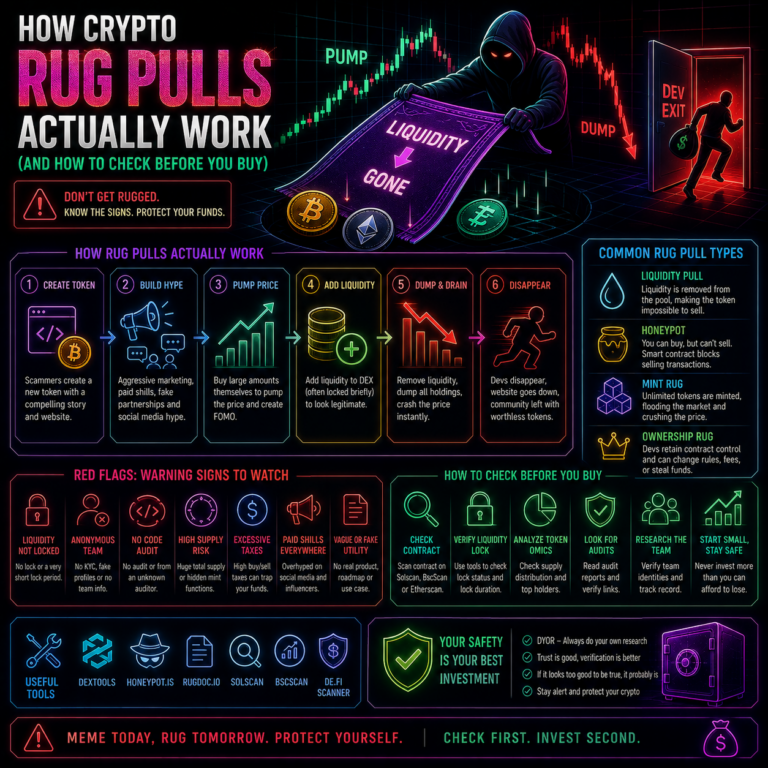
CoinGecko’s research on failed tokens records that a liquidation cascade on 10 October 2025 wiped roughly $19 billion of leveraged positions within 24 hours, and that Q4 2025 alone accounted for 7.7 million token failures, about 34.9% of all failures in its dataset.
That is a market moved by margin calls rather than by analysis. It is also where automation genuinely operates, though not in the way the old article implied. Hyperliquid’s published liquidation documentation describes a mark price combining external exchange prices with its own order book, which it states is more robust than a single instantaneous book price, and sets out the exact formula determining when a position is closed. That is automated decision-making with real market impact, and it is deterministic rather than predictive.
Where the data is thin
Now the harder part. The broader claim at the centre of most AI crypto market analysis 2026 commentary, that AI has improved forecasting or changed price discovery, is not supported by anything publicly measurable.
Sentiment analysis, predictive models and adaptive strategies are all described in vendor material and almost never in verifiable performance data. There is no public dataset showing AI-driven strategies outperforming, no regulator-published study of retail outcomes, and no exchange reporting on what share of volume is model-driven. Absence of evidence is not evidence of absence, but a rewrite whose job is sourcing has to say plainly that this part could not be sourced.
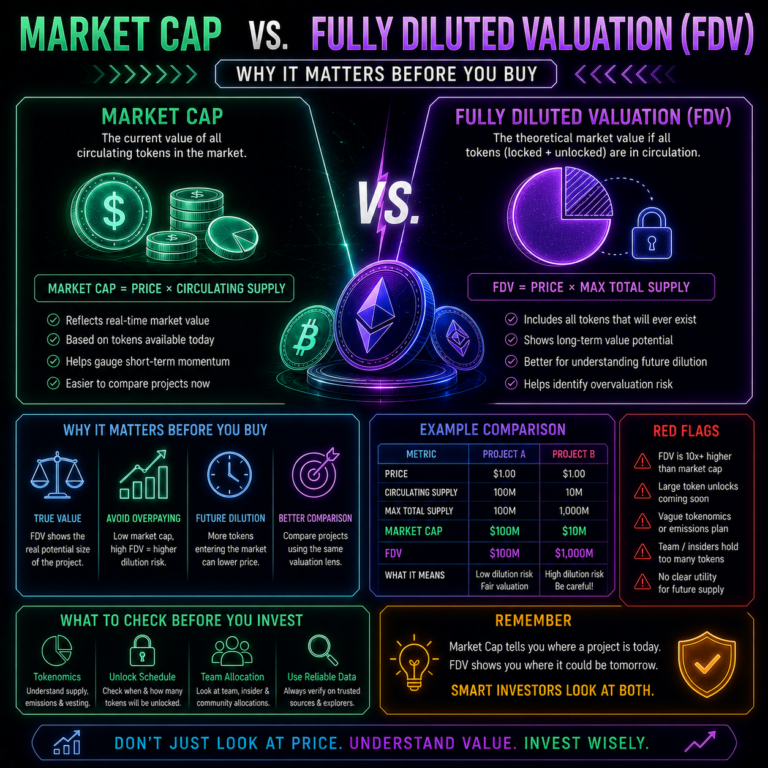
For scale, CoinGecko’s AI category stood at $15.95 billion on 1 September 2026 against a total crypto market capitalisation of $2.736 trillion, roughly 0.58%. That measures tokens rather than usage, so it is not a direct answer, but it is the only sector-level number available and it is small.
What has genuinely changed for analysts
Something real did change, and it is duller than the narrative. The data available to an ordinary trader is vastly better than it was, and most of it is free.
Daily ETF flow tables, per-chain DEX volume, liquidation formulas published by the venues themselves, token failure rates, dominance breakdowns. DefiLlama recorded $9.95 billion in 24-hour DEX volume across 783 protocols in late August 2026. None of that required a model to produce or to read.
The practical upgrade in AI crypto market analysis 2026 offers is therefore access rather than intelligence. Our coverage of crypto volatility and ETF inflows works through how those flows behave, and our overview of crypto trading brokers covers the venues that publish them.
How to test any claim in this area
Three questions settle most AI crypto market analysis 2026 claims. Is there a number, from a named source, with a date? Would the effect described be visible in public market data if it were real, and is it? And is the mechanism deterministic, like a liquidation threshold, or predictive, like a forecast? Deterministic automation is verifiable. Predictive claims usually are not.
Applied to the forecasting claims, all three fail. Applied to the ETF flows, the liquidation data and the published mark-pricing formulas, all three pass. That split is the honest answer to the question in the headline.
Disclaimer: This article is for informational and educational purposes only and is not financial or investment advice. Nothing here is a forecast, and no tool, strategy or platform is endorsed. Crypto prices are volatile and you may lose money. Market figures are dated and constantly changing, so verify the current data before relying on any of it. See our editorial policy for how we source and verify our reporting.
Final Thoughts
The measured conclusion from the 2026 AI crypto market analysis is that this market has been restructured by regulated flows and leverage mechanics, and that the AI contribution is real but confined to places where automation is deterministic and published, such as liquidation engines and mark pricing.
Everything beyond that, the forecasting, the sentiment edge, the adaptive strategies, remains asserted rather than demonstrated in any public data we could find. That may change, and the honest thing to do is say what is measurable today and date it. Check the flow tables and the liquidation documentation yourself. Both are free, both are current, and neither requires you to take anyone’s word for it.
Data Sources
- Farside Investors, Bitcoin ETF Flow (US$m), checked August 2026
- CoinGecko Research, Dead Coins: Over 50% of Cryptocurrencies Have Failed, updated 17 April 2026
- Hyperliquid, Liquidations documentation
- DefiLlama, DEX volume rankings, checked August 2026
- CoinGecko, Artificial Intelligence (AI) category, read 1 September 2026