Skip to main content







The article this replaces described AI crypto trading bots 2026 buyers might use, listed their advantages, and never once mentioned that the category is also one of the most active fraud vectors regulators track. That omission is not a minor gap. The tools are real and some are useful, but the same phrase sells both legitimate software and Ponzi schemes, and the difference is not visible in the marketing. Here is what the regulators have actually documented, and the four checks they recommend before you pay anyone.
Key Takeaways
- The CFTC’s standing advisory is titled “AI Won’t Turn Trading Bots into Money Machines” and states plainly that AI cannot predict sudden market changes.
- Claims of high or guaranteed returns are identified by the CFTC as red flags of fraud, not as features.
- One case cited in that advisory involved more than $1.7 billion taken from at least 23,000 people using a bot that promised 10% monthly.
- The SEC filed a complaint in May 2026 over an alleged $12.3 million scheme built on claimed proprietary AI trading bots.
- Fees, spreads and subscription costs are the quiet drag on any legitimate AI crypto trading bots 2026 setup.
What AI crypto trading bots 2026 vendors sell actually do
Start with the honest version. Automated trading software connects to an exchange through an API key and executes rules you configure: grid strategies, dollar-cost averaging, rebalancing, stop-losses. That is real, it works, and it removes the need to watch a market that never closes.
Where the “AI” label adds something genuine, it usually means the parameters adapt to conditions rather than staying fixed. Where it adds nothing, it is a marketing layer on a rules engine that has existed for a decade. Both are sold using the same three letters, which is the first problem with evaluating AI crypto trading bots 2026 vendors are selling.
What the regulator actually says
The CFTC’s Office of Customer Education and Outreach published a customer advisory on 25 January 2024 whose title is the argument: AI Won’t Turn Trading Bots into Money Machines. It remains the agency’s standing guidance.
The advisory states that fraudsters exploit public interest in AI to promote automated trading algorithms, trade signal strategies and crypto arbitrage schemes promising unreasonably high or guaranteed returns, and that AI technology cannot predict the future or sudden market changes. Melanie Devoe, the office’s director, summarised it as telling investors to be wary of the hype. That applies to AI crypto trading bots 2026 marketing as squarely as it did when the advisory was written.
Read that carefully, because it inverts the usual framing. Regulators do not treat a high advertised return as an aggressive claim to be discounted. They treat it as a marker of fraud.
The case that shows the shape
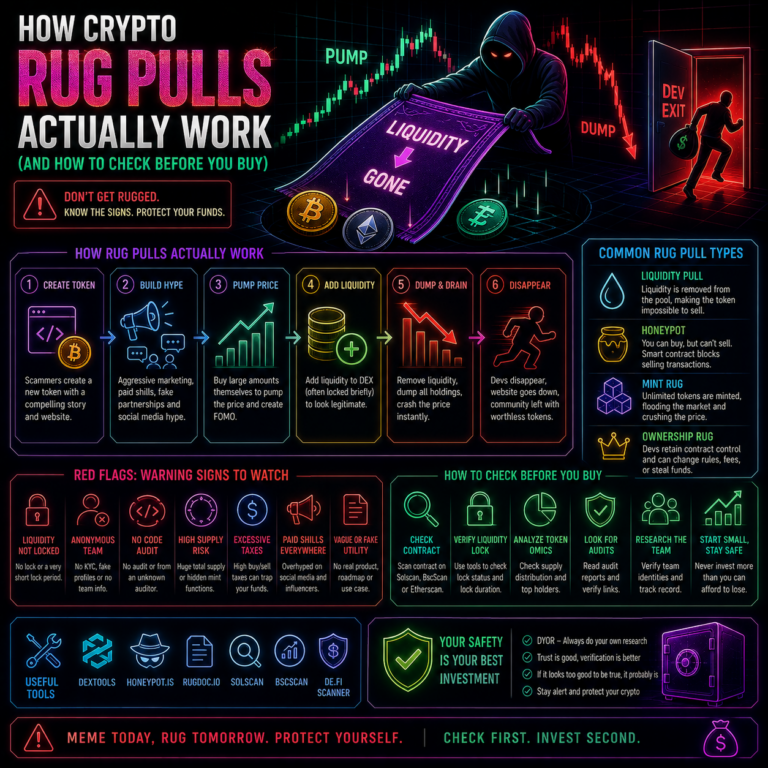
The advisory includes a case study worth knowing in detail. Over roughly three years, Cornelius Johannes Steynberg took more than $1.7 billion in bitcoin from at least 23,000 people through Mirror Trading International, using websites and social media accounts.
The pitch was familiar. Entry from $100 in bitcoin, no trading experience required, and a proprietary bot promising at least 10% monthly, which is more than 200% a year. Referral bonuses for bringing in friends. Fake customer account balances generated using demo accounts so the dashboard looked healthy.
In reality very little was traded. It operated as a Ponzi scheme, paying earlier investors with later deposits. Nearly 30,000 bitcoin were involved, worth about $1.7 billion at the time.
The pattern continued into 2026
This is not historic, which matters for anyone assessing AI crypto trading bots 2026 offers today. In a complaint filed on 29 May 2026, the SEC accused Nathan Fuller of running a scheme through Privvy Investments that sold interests in a crypto arbitrage operation described as powered by proprietary AI trading bots, with promised returns of 40% to 50% within 30 to 45 days and in some cases more than 100% inside a month. Reported losses were around $12.3 million. Those are allegations rather than findings, and the case is ongoing.
For scale on the wider category, the FBI’s Internet Crime Complaint Center recorded $20.877 billion in reported internet crime losses during 2025, of which complaints involving cryptocurrency accounted for $11.37 billion.
The four checks the CFTC recommends
The advisory lists four things to do before trusting money to a trading bot or signal provider, and they are more concrete than most consumer guidance.
Research the background of the company or trader, and run a reverse image search on key personnel to verify they are real people. Check the age of the trading website’s domain registration, which takes seconds and frequently ends the conversation. Get a second opinion from a financial advisor or someone you trust before committing. And understand the risks of the underlying assets, including what fees, spreads and subscription costs would do to returns.
That last point applies to legitimate products too, which is why it is the most useful of the four for anyone comparing AI crypto trading bots 2026 platforms honestly. A subscription fee plus exchange fees plus spread on every automated trade compounds against you continuously, and a strategy that looks marginally profitable before costs frequently is not after them. Our overview of crypto trading bots covers the platform landscape, and our guide to choosing a broker covers the venue underneath.
One risk the old version understated
Connecting any of the AI crypto trading bots 2026 platforms offer to an exchange means issuing an API key. Restrict it. Trading permissions only, never withdrawal permissions, and IP-restricted where the exchange supports it. A bot that requires withdrawal access is asking for the ability to remove your funds, and no trading strategy legitimately needs it.
Disclaimer: This article is for informational and educational purposes only and is not financial or investment advice, and no platform or product is endorsed. Automated trading can lose money quickly, and no strategy or software produces assured returns. Enforcement matters described here are allegations unless stated as concluded. If you believe you have been defrauded, report it to your national fraud body. See our editorial policy for how we source and verify our reporting.
Final Thoughts
The measured position on AI crypto trading bots 2026 is that the software category is legitimate and the marketing category is compromised. Automation solves a real problem for anyone trading a market that never closes. It does not generate returns from nothing, and the regulator responsible for this area has said so in a document whose title leaves no room for interpretation.
Use the four checks. Restrict the API key. Model the fee drag before the upside. And treat any advertised return figure as information about the seller rather than the software, because that is precisely how the CFTC treats it.
Data Sources
- Commodity Futures Trading Commission, CFTC Customer Advisory Cautions the Public to Beware of Artificial Intelligence Scams, Release 8854-24, 25 January 2024
- CFTC, Customer Advisory: AI Won’t Turn Trading Bots into Money Machines
- FBI Internet Crime Complaint Center, reporting portal and annual crime report data
- Bitcoin.com News, SEC complaint against Privvy Investments, reported 1 June 2026