The machine learning crypto 2026 story is not the one most coverage tells. Automated risk systems did not arrive as a promise this year. They went live on one of the largest lending protocols in decentralised finance, cut a 96 hour process down to under a minute, wrongly liquidated 34 users for roughly $27 million in a single morning, and then the firm operating them walked away from the mandate entirely.
All three happened between March and April 2026, to the same protocol, with the same technology. That makes it the most useful case study available, because it contains the win, the failure mode and the business model problem in one sequence. What follows works through each in turn, with the assumptions stated rather than implied.
Key Takeaways
- Automated risk oracles cut Aave’s parameter update cycle from an average of 96 hours to under a minute, which is the clearest measured win in machine learning crypto 2026 to date.
- On 10 March 2026, a configuration error in Aave’s Correlated Asset Price Oracle underpriced wstETH by about 2.85% and triggered roughly $27 million in wrongful liquidations across 34 accounts.
- The system worked exactly as designed. A recommendation was executed one block later and liquidations followed within minutes, leaving effectively no window for human review.
- On 6 April 2026, Chaos Labs terminated its three year Aave engagement, turning down a $5 million budget and stating it had run the mandate at a loss.
- The EU deferred its high-risk AI obligations from 2 August 2026 to 2 December 2027 under Regulation (EU) 2026/1744, so the compliance backstop many people assumed was arriving has not arrived.
What Machine Learning Actually Does Here
The generic version of this topic talks about models that analyse patterns and adapt to conditions. That describes nothing specific enough to evaluate. The real application in machine learning crypto 2026 is narrower and more interesting: continuously adjusting the risk parameters that govern lending markets.
Aave alone spans more than ten deployments, hundreds of markets and thousands of variables: supply and borrow caps, liquidation thresholds, loan-to-value ratios, liquidation bonuses, interest rate curves, debt ceilings. Each is a lever determining how much leverage the system tolerates before it forces positions closed.
This is the narrow, checkable version of the broader shift we’ve tracked in machine learning and crypto risk management. Historically a human proposed a change, wrote a payload, and put it to a governance vote. Machine learning crypto tools replace that loop. Indicators are monitored continuously, and when a threshold is crossed and internal validation passes, the update is submitted directly to a Risk Stewards contract that only accepts changes inside bounds governance has already approved. That constraint matters and is often left out of summaries.
Win One: The Speed Gain Is Real and Measurable
The headline number for machine learning crypto systems is the one worth remembering. Manual risk parameter changes on Aave took an average of 96 hours. With automated risk oracles the same change completes in under a minute.
That is the strongest single data point in machine learning crypto 2026, and it is not a marginal efficiency gain. In a market that moves continuously, a four day lag between identifying a risk and acting on it means the parameter set is almost always calibrated to conditions that have already passed. Compressing that to seconds is the single strongest argument for automation in this space, and it is supported by an operating record rather than a projection.
Win Two: The Track Record Under Automation Held Up
The longest running machine learning crypto deployment in lending is the clearest test case. Chaos Labs priced every loan initiated on Aave from November 2022 onward and managed risk across all V2 and V3 markets with zero material bad debt. Over that period the protocol grew from $5.2 billion in total value locked to more than $26 billion, processed over $2 billion in liquidations, and passed $2.5 trillion in cumulative deposit volume.
Zero material bad debt at that scale is the outcome the whole exercise is measured against. Any fair assessment of machine learning crypto 2026 starts by acknowledging that the automated approach delivered on its core promise for three years before it broke.
Win Three: Simulation Moved From Research to Execution
The second application is portfolio-level allocation, a pattern now running across much of the sector as our coverage of AI-powered DeFi protocols sets out. Gauntlet runs agent-based simulations across the markets a vault touches, caps allocations to what those simulations suggest a market can absorb, and rebalances continuously. Its Compound partnership was renewed through September 2026, covering up to 50 Comet deployments.
The meaningful shift is from advice to action. Earlier tooling produced recommendations humans then chose to implement. Curated vaults execute directly. That removes the delay, and it removes the review step, which is precisely the tradeoff the next section is about.
The $27 Million Warning
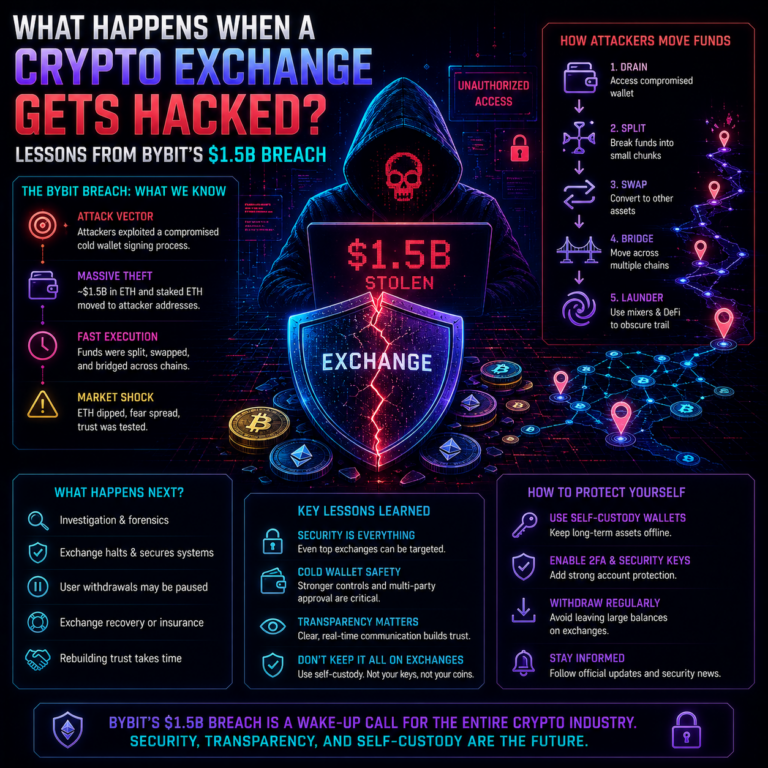
On 10 March 2026, Aave’s V3 Ethereum Core and Prime instances suffered a malfunction in the Correlated Asset Price Oracle, a safety mechanism built to cap sudden price movements and prevent manipulation.
According to the post-mortem published by Chaos Labs, an inconsistency between the snapshot ratio and the snapshot timestamp caused the oracle to report a capped wstETH exchange rate of roughly 1.1939 against an actual market rate near 1.228. That is an undervaluation of about 2.85%. For highly leveraged positions in E-Mode, 2.85% was enough. Thirty-four accounts holding 10,938 wstETH were liquidated on healthy collateral, worth roughly $26 million to $27 million depending on the pricing snapshot used.
Liquidation bots captured 499 ETH in bonuses, around $1.2 million. Aave recovered 141 ETH through BuilderNet refunds plus 13 ETH in fees, with DAO treasury funds covering the remainder of the identified excess. The protocol incurred no bad debt and committed to compensating affected users. Chaos Labs stated the incident reflected an on-chain configuration misalignment rather than a flaw in the underlying oracle design.
Here is the part that matters for anyone assessing these systems. Nothing malfunctioned in the machine learning sense. The risk recommendation was produced, an execution agent submitted it one block later, and liquidations followed within minutes. The speed that made automation valuable is the same speed that gave nobody a chance to catch a bad input. Faster systems do not just act on good signals faster. They act on wrong ones faster too, and that asymmetry is the central risk in machine learning crypto 2026.
The Economics Problem Nobody Priced In
On 6 April 2026, Chaos Labs announced it was terminating its Aave engagement. Aave Labs had offered to raise its budget to $5 million. The firm said it needed closer to $8 million to cover V3, V4 and its institutional work, and that it had been running the mandate at a loss since 2022.
This is the least discussed constraint in machine learning crypto 2026, and arguably the most important. The comparison its founder drew is the useful one. Aave reported roughly $142 million in 2025 revenue, so a $5 million risk budget is around 3.5%. Traditional banks typically allocate 6% to 10% of revenue to risk and compliance functions. Chaos Labs was also the third technical contributor to leave Aave inside 90 days, following BGD Labs and the Aave Chan Initiative, and the departure landed days after V4 went live on Ethereum mainnet on 30 March 2026 with a new hub-and-spoke architecture.
The lesson is structural, not reputational. Automated risk management has been funded as a lightweight consulting engagement sitting on top of billions of dollars in user deposits. The technology scaled. The commercial model underneath it did not.
What The EU Just Changed, And What It Did Not
The EU AI Act’s high-risk obligations were due to bite on 2 August 2026. That date moved. Regulation (EU) 2026/1744, the Digital Omnibus on AI, was signed on 8 July 2026, published in the Official Journal on 24 July and entered into force on 27 July 2026.
It defers obligations for stand-alone high-risk systems under Annex III to 2 December 2027, and for AI embedded in regulated products under Annex I to 2 August 2028. Recital 40 attributes the delay to the unavailability of harmonised standards and the slow designation of national competent authorities rather than to any softening of the requirements themselves.
This sits alongside the wider shifts covered in our crypto regulation update. What did not move is the Article 50 transparency regime, which applied from 2 August 2026, with a machine-readable marking deadline of 2 December 2026. Penalties for high-risk breaches reach €15 million or 3% of global annual turnover. The practical implication for machine learning crypto 2026 is simple: the documentation, logging and human oversight requirements that would have forced discipline onto automated risk systems in Europe are now roughly fifteen months further out than planned.
What This Means For A Normal Portfolio
Very little of the machine learning crypto 2026 picture described above is a retail product. Retail-facing products remain closer to the automated trading tools aimed at individual investors, and no consumer tool gave individuals the ability to adjust liquidation thresholds in 2026. If you hold assets in a lending protocol or a curated vault, though, you are already exposed to these systems whether or not you chose them.
Three questions are worth asking about any platform you use. Who sets the risk parameters, and are they funded well enough to keep doing it. Can automated changes execute without human review, and within what bounds. What happened the last time a price feed was wrong, and who absorbed the loss. Aave answered that last one well by covering affected users in full, which is not guaranteed elsewhere.
Machine Learning Crypto 2026 FAQ
Three questions come up repeatedly on machine learning crypto 2026.
Did machine learning cause the $27 million Aave liquidations? No. Chaos Labs attributed it to an on-chain configuration misalignment, not a modelling failure. The automation determined how fast the error propagated, not whether it occurred.
How much faster is automated risk management? Parameter updates on Aave moved from an average of 96 hours under the manual process to under a minute with risk oracles.
Are EU AI rules now in force for these systems? Partly. Transparency obligations applied from 2 August 2026, but high-risk obligations were deferred to 2 December 2027 by Regulation (EU) 2026/1744.
Final Thoughts
The honest reading of machine learning crypto 2026 is that the technology mostly worked and the arrangements around it did not. Three years of zero material bad debt is a real result, and so is a 96 hour process collapsing to under a minute. Those are operating history, not marketing claims.
What broke were the parts that had nothing to do with the models: a configuration process that did not account for an on-chain constraint, an execution path with no human checkpoint, a funding structure that could not sustain the people maintaining it, and a regulatory backstop that slipped by fifteen months. Judge machine learning crypto infrastructure on that basis. The interesting question in 2026 is not whether the models are good enough. It is whether anyone is being paid enough to watch them.
Data Sources
- Digital Omnibus on AI, full legal text and dates: Regulation (EU) 2026/1744, EUR-Lex
- Chaos Labs termination notice and Aave operating record: Aave governance forum, 6 April 2026
- Oracle malfunction and liquidation figures: The Block, 11 March 2026
- Risk oracle architecture and Risk Stewards constraints: Chaos Labs, Risk Oracles
- Deferral analysis for regulated firms: White & Case, EU AI Omnibus enters into force
- Related coverage on this site: machine learning and crypto risk management
Disclaimer
This article is for informational purposes only and does not constitute financial, investment, or trading advice. Cryptocurrency markets are highly volatile and you may lose money. Figures quoted were accurate at the time of writing and will change. Always do your own research and consider speaking to a qualified financial