Search for a no KYC crypto exchange list and you get two very different things presented as one category. On one side are decentralised exchanges, which are software and have no account to open, so identity verification never enters the picture. On the other are custodial companies advertising verification-free tiers up to some withdrawal threshold. Those are not variations on a theme. They differ in who holds your money, what recourse you have, and how long the arrangement is likely to last. This piece separates them, with current data for the first category and an honest account of why the second is shrinking.
Key Takeaways
- Any honest no KYC crypto exchange list starts with DEXs, which need no identity check because there is no account and no custodian.
- DefiLlama tracked $9.95 billion in DEX volume over 24 hours across 783 protocols on 28 August 2026.
- Custodial exchanges with verification-free tiers still hold your assets and can freeze, restrict or close accounts.
- The EU’s Anti-Money Laundering Regulation bans regulated providers from maintaining anonymous crypto accounts from July 2027.
- This article does not publish withdrawal thresholds for custodial platforms, and the reason is explained below.
The distinction most articles blur
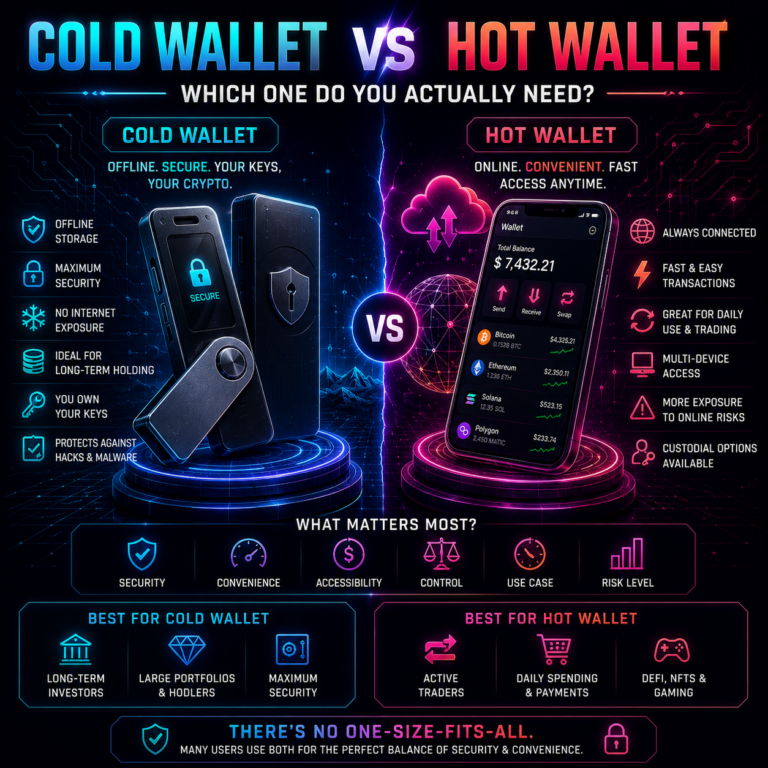
A centralised exchange is a business. It takes custody of your assets, matches your trades on its own books, and operates under whatever licensing its jurisdiction requires. Verification exists because the company has legal obligations to know who its customers are. A tier that skips it is a policy choice the company made and can reverse tomorrow.
A decentralised exchange is a smart contract. You connect a wallet you control, the contract executes a swap, and your assets never leave your custody. There is no account because there is no company holding anything. That is not a loophole or a privacy feature bolted on. It is what non-custodial means.
The practical consequence: on a DEX, nobody can freeze your funds because nobody has them. On a custodial platform with a no-verification tier, somebody has them and can freeze them, and the absence of ID makes recovery harder rather than easier. If you want the regulated comparison, our overview of the exchanges defining the industry covers that side.
The real no KYC crypto exchange list: non-custodial venues
This is where any honest no KYC crypto exchange list actually lives, and it is not small. DefiLlama’s DEX volume dashboard, checked 28 August 2026, recorded $9.95 billion in spot DEX volume over 24 hours and $191.9 billion over 30 days, across 783 tracked DEX protocols.
The largest by 24-hour volume were Uniswap at $2.72 billion across 47 chains, Pump at $1.46 billion, PancakeSwap at $914 million across 12 chains, Aerodrome at $520 million and Orca at $365 million. Over 30 days, Uniswap processed $50.5 billion and PancakeSwap $25.2 billion. Order-book venues appear too, with Hyperliquid at $253 million in 24-hour spot volume.
None of these asks who you are, because none of them can. What they do ask, implicitly, is that you understand what you are signing. Every risk we covered in our piece on choosing where to trade still applies, plus smart contract risk and the permanence of on-chain error.
The awkward part: you still need to get in
Here is the constraint no amount of platform-hunting removes, and it is missing from every no KYC crypto exchange list we found. A DEX swaps one crypto asset for another. It cannot turn your bank balance into crypto. Fiat on-ramps at regulated providers require identity verification, and that is the step with no realistic workaround in 2026.
So the practical position: non-custodial trading without ID is genuinely available and widely used, while verification-free entry from a bank account is not. Anyone promising otherwise is describing either a custodial service that will ask eventually, or one operating outside the rules of wherever you live.
Why we do not publish custodial no-KYC thresholds
Most competing pages build their no KYC crypto exchange list around exactly this: custodial platforms and the amounts you can withdraw before ID is required. We have not included those figures, and the reasoning is worth stating openly rather than quietly omitting.
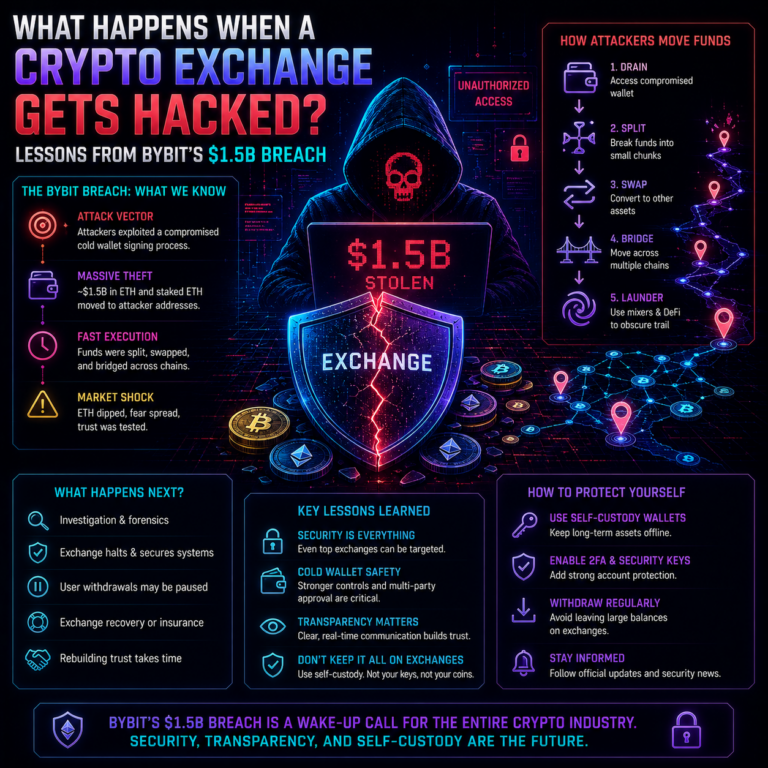
Those thresholds change without notice, so a published figure is wrong within weeks and readers act on stale information. The category is also contracting rather than growing: eXch, a no-verification swap service, shut down effective 1 May 2025 after declining requests to block funds from the Bybit theft. A list of such venues is a list of businesses with unusually short and unpredictable lifespans, and readers who route funds through one on our recommendation carry that risk.
There is a third reason. Publishing a table of withdrawal ceilings is functionally a guide to staying below identity checks, which is a different product from explaining how custody models differ. Our editorial policy commits us to the second and not the first.
The direction of travel
Jurisdiction matters more than platform choice, and the rules are tightening. The EU’s Anti-Money Laundering Regulation, Regulation 2024/1624, prohibits regulated crypto-asset service providers from maintaining anonymous accounts from July 2027, as The Crypto Times reported in June 2026. Those duties fall on service providers rather than individuals holding their own keys, which is precisely why the non-custodial and custodial categories are diverging rather than converging.
DefiLlama now maintains a MiCA tracker covering which assets and issuers meet European requirements, which is a reasonable place to check jurisdiction-specific status before assuming a platform is available to you.
One more thing that does not change with platform choice: tax. A swap is generally a disposal of whatever you swapped, and reporting obligations do not depend on whether anyone checked your passport.
Disclaimer: This article is for informational and educational purposes only and is not financial, tax or legal advice, and nothing here encourages evading identity, reporting or tax obligations that apply to you. No platform is endorsed. Rules differ significantly by country and change over time. Decentralised trading carries risks including total loss with no recourse. Do your own research and consider speaking to a qualified professional. See our editorial policy for how we source and verify our reporting.
Final Thoughts
The useful version of a no KYC crypto exchange list is short and structural rather than long and ranked. If you already hold crypto and want to trade without an account, decentralised exchanges do that by design, they handle nearly $10 billion a day, and the largest are audited public infrastructure rather than someone’s offshore company.
If what you actually want is to buy crypto with money from a bank without showing ID, that is a different question with a less satisfying answer, and the venues that claim to offer it are the ones most likely to disappear. Choose based on who holds your assets, not on who asks fewest questions, and check the rules where you live before assuming any of this applies to you.
Data Sources
- DefiLlama, DEX Volume Rankings, checked 28 August 2026
- DefiLlama, MiCA compliance tracker, checked 28 August 2026
- The Crypto Times, EU to ban privacy coin services under sweeping AML rules, 20 June 2026